
How Childhood Shapes the Adult Nervous System: Understanding ACEs and C-PTSD
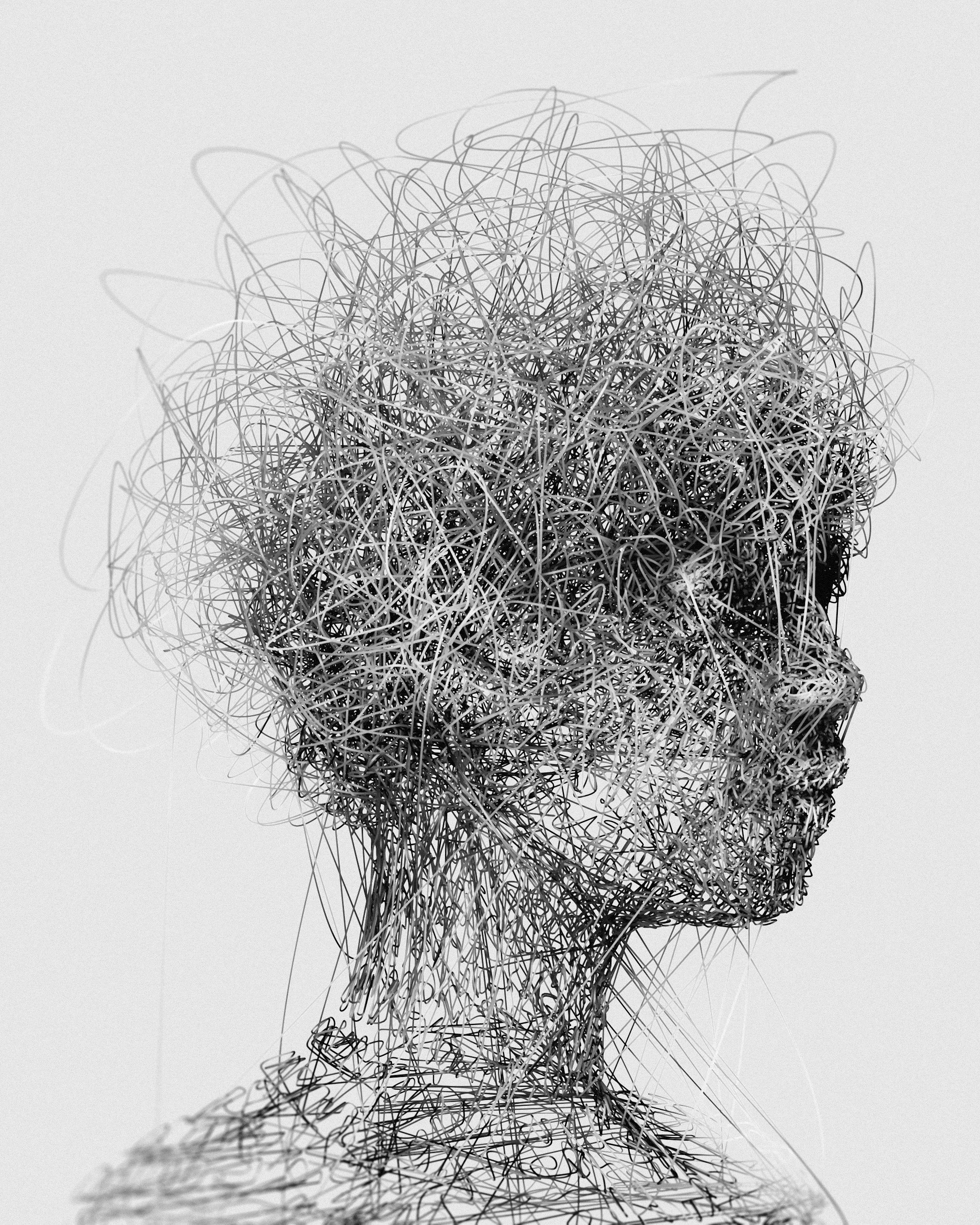
Why some patterns of anxiety, self-criticism, and emotional overwhelm have roots that go back further than we realize — and why thinking your way out of them rarely works.
If you've spent years in therapy "understanding" your patterns but still find yourself flooded with anxiety, shutting down during conflict, or hearing a harsh inner voice that never seems to quiet down, you're not failing at healing. You may simply be working with the wrong tools for the kind of wound you're carrying.
Adverse Childhood Experiences (ACEs) and Complex PTSD (C-PTSD) offer a framework for understanding why certain emotional patterns feel so stubborn — and why they live in the body and nervous system, not just in our thinking.
What Are ACEs, and How Do They Lead to C-PTSD?
Adverse Childhood Experiences refer to potentially traumatic events or conditions that occur before the age of 18. The original ACE research focused on categories like abuse, neglect, and household dysfunction. Still, the concept has expanded as clinicians have learned more about how the developing nervous system responds to chronic stress.
Complex PTSD develops when a person experiences prolonged, repeated trauma, often within relationships they depend on for safety and connection. Childhood is the most common setting for this kind of trauma, because children are entirely dependent on the adults around them and have no way to escape, fight back, or make sense of what's happening.
The result isn't a single "wound" that can be processed and closed. It's a developmental experience that shapes how the nervous system, sense of self, and relational patterns form in the first place.
Trauma Doesn't Have to Look Like "Trauma"
One of the biggest barriers to recognizing C-PTSD is that many people don't believe what happened to them "counts." When we picture trauma, we often picture something dramatic, like abuse, violence, or disaster. But the nervous system doesn't categorize experiences by how they'd look to an outside observer. It responds to chronic threat, chronic dismissal, and chronic unmet need, regardless of how subtle or "normal" those experiences seemed at the time.
Consider how many people grew up with experiences like these:
Being told to "stop crying" or "calm down" whenever they expressed sadness, fear, or anger, teaching them, early and often, that emotions were a problem to be managed rather than information to be understood.
Living under constant pressure to achieve, where love, approval, or a sense of safety felt conditional on grades, performance, behavior, or being "easy" for the adults around them.
Growing up with an ongoing undercurrent of criticism, not necessarily cruel, but a steady drumbeat of "not quite good enough," "you could have done better," or comparisons to siblings or peers.
Having a parent who was emotionally unavailable, anxious, depressed, or unpredictable — so the child learned to read the room constantly and adjust themselves to keep things stable.
None of these experiences requires a single dramatic incident. What they share is repetition and powerlessness. A child, over and over, learns that their emotional world wasn't safe to express, wasn't a priority, or was something to apologize for. That's enough for the nervous system to adapt in lasting ways.
Recognizing the Symptoms of C-PTSD
C-PTSD often hides in plain sight because many of its symptoms get labeled as personality traits, anxiety disorders, or "just how I am." Some common patterns include:
Emotional dysregulation — feeling things very intensely, swinging between emotional flooding and complete shutdown, or struggling to identify what you're feeling at all.
A harsh inner critic — an automatic internal voice that jumps to blame, shame, or "not good enough" before you've even had a chance to think it through.
Chronic hypervigilance — scanning for other people's moods, anticipating conflict before it happens, or feeling unable to relax even when nothing is wrong.
Difficulty with trust and closeness — feeling unsafe in relationships, either avoiding intimacy or becoming anxiously preoccupied with it, sometimes both at different times.
Dissociation — zoning out, feeling foggy or "checked out," or feeling disconnected from your body or your own emotions.
A pervasive sense of shame or "wrongness" — not just feeling bad about specific things you've done, but feeling like there's something fundamentally flawed about who you are.
Perfectionism and overachievement — a drive to be exceptional that isn't really about ambition, but about earning safety, approval, or the right to take up space.
These symptoms often don't feel like "trauma symptoms" to the person experiencing them. They feel like a personality. That's part of what makes C-PTSD so persistent — it's woven into identity, not experienced as something separate from the self.
The Nervous System Impact: A Raised Baseline
One of the most important things to understand about C-PTSD is that it's not primarily a thinking problem. It's a regulation problem.
When a child grows up in an environment of chronic stress, criticism, or emotional neglect, their nervous system adapts to that environment. The autonomic nervous system essentially recalibrates its baseline, its resting state, to match the level of threat it experienced as normal. For many people with C-PTSD, that means the baseline is set higher: more alert, more braced, more ready to respond to danger, even when no danger is present.
This shows up in everyday life as a body that feels keyed up even at rest, a startle response that's quick to fire, or a sense of being unable to fully relax, even on vacation, even in safe relationships, even when "everything is fine."
Alongside this raised baseline, the brain develops automatic patterns, negative thoughts, self-protective assumptions, and reflexive responses that fire before conscious thought can weigh in. A look, a tone of voice, or a moment of silence from someone else can trigger a full-body reaction and a cascade of thoughts like "I did something wrong" or "they're going to leave," all in a fraction of a second, all rooted in patterns laid down long before the person had the language to understand what was happening to them.
This is why people with C-PTSD often describe feeling like they're reacting to the present moment with an intensity that doesn't match it. In a sense, they are, but they're also reacting to every similar moment that came before.
How Core Beliefs Get Built and Why They're So Hard to Talk Your Way Out Of
Every repeated experience teaches the brain something. A child who is consistently told to stop crying doesn't just learn "don't cry" — they learn something deeper: my feelings are a burden, or I am too much, or no one is coming to help me with this. A child under constant pressure to achieve doesn't just learn to work hard — they learn my worth depends on my performance, or I am only valuable when I'm useful.
These become core beliefs, and they don't stay still. Once formed, they act like a filter. The brain starts noticing evidence that confirms the belief and discounts or ignores evidence that contradicts it. Every time something goes wrong, the belief "I'm not good enough" gets a little more evidence in its favor. Every time someone is kind, the belief might dismiss it ("they're just being polite," "they don't really know me").
This is why core beliefs are reaffirmed over and over across a lifetime, even in adulthood, even in circumstances that have nothing to do with the original experiences that created them. The belief becomes a lens the person sees their whole life through, and the lens itself feels like truth, not like a belief at all.
This is also why insight alone so often isn't enough. Many people with C-PTSD can describe their patterns with remarkable clarity. They can say, "I know logically that my worth isn't tied to my productivity," or "I know my partner isn't my father." And yet the feeling, the bracing, the shame, the panic, shows up anyway, often instantly and involuntarily.
That's because these beliefs aren't stored as ideas. They're stored as felt experiences that are encoded in the body and nervous system at a level below conscious, language-based thought. You cannot think your way out of something that was never created by thinking in the first place.
Why Healing Requires More Than Talk: EMDR, Brainspotting, and Somatic Work
If core beliefs and nervous system patterns are stored below the level of conscious thought, then healing has to reach that level too. This is where evidence-based, body-oriented approaches become essential, not as an alternative to understanding your story, but as a way of actually metabolizing it.
EMDR (Eye Movement Desensitization and Reprocessing) works by helping the brain access and reprocess memories that are "stuck," stored in a way that keeps triggering the same emotional and physical responses. Through bilateral stimulation, the brain is able to integrate these memories more fully, often allowing the original belief ("I'm not safe," "I'm not enough") to shift into something more accurate ("I survived that. I'm safe now."), not as a thought you tell yourself, but as something that begins to feel true in the body.
Brainspotting works on a similar principle, using eye position to access areas of the brain where trauma and emotional pain are held, often reaching material that talk therapy alone doesn't touch, including experiences from before a person had words to describe them.
Somatic work — approaches that focus on bodily sensation, breath, movement, and the felt sense of safety or threat help directly address that raised nervous system baseline. Rather than only talking about feeling unsafe, somatic approaches help the body practice and experience what safety actually feels like, gradually widening the range in which a person can stay regulated.
What these approaches have in common is that they don't ask the nervous system to simply believe something different. They give the nervous system new experiences and new experiences, repeated over time, are what eventually rewrite old patterns. This is how the baseline itself can shift: from a system braced for threat to one that can recognize safety when it's actually present.
Moving Forward
If any of this feels familiar, it doesn't mean something is wrong with you. It means your nervous system did exactly what it was supposed to do: adapt to keep you safe in the environment you were in. The patterns that once protected you may simply no longer fit the life you're living now.
The good news is that these patterns are not permanent. With the right kind of support, one that works with the nervous system rather than just the intellect, it's possible to build a calmer baseline, quiet the automatic responses, and begin to experience safety not just as an idea, but as a felt reality.