
Shamanic Drumming: An Ancient Practice for Modern Healing
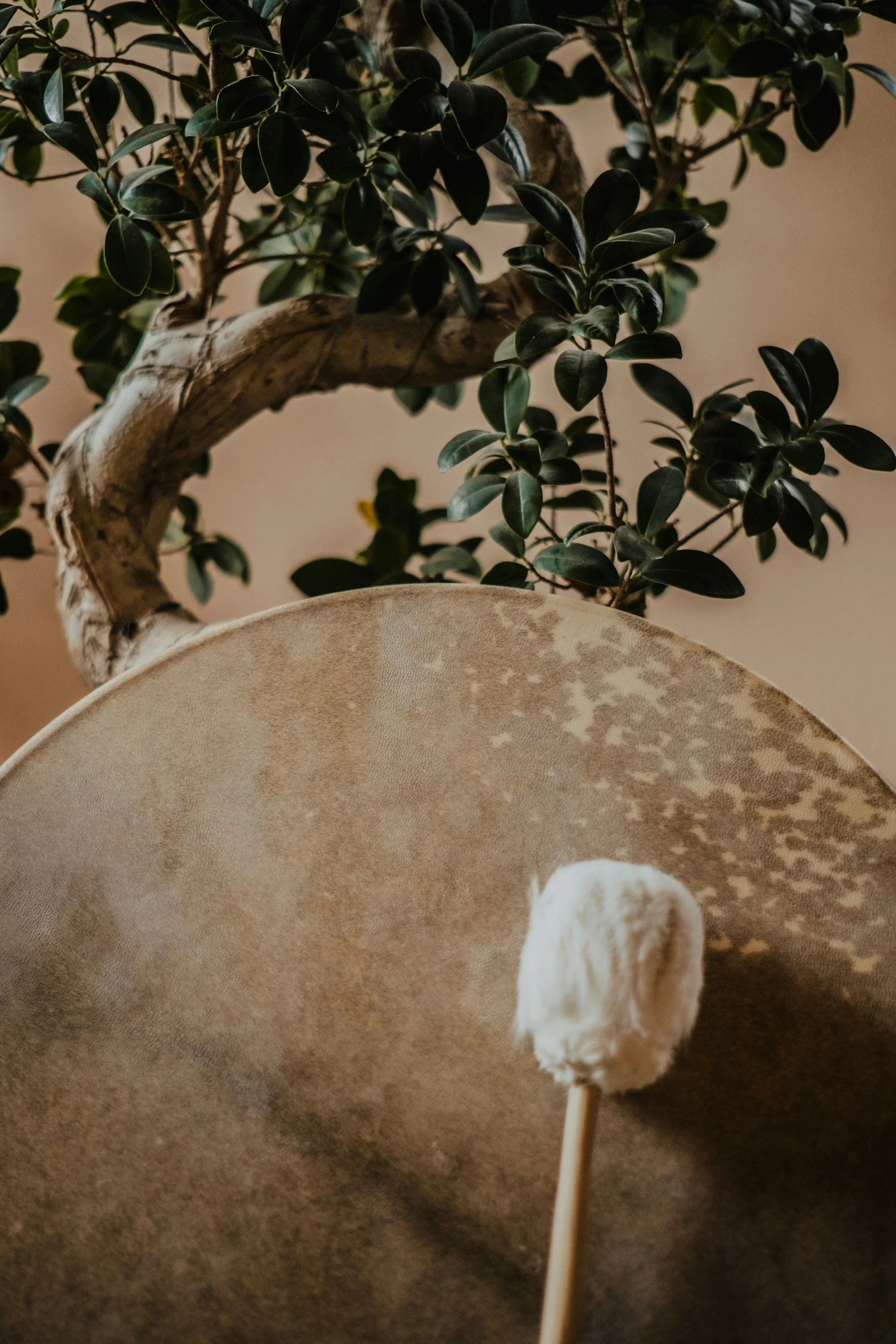
How rhythmic sound reconnects us to our bodies, regulates our nervous systems, and links us to one another.
What It Is: The Power of Rhythm
Drumming and rhythmic sound — rattling, stomping, clapping — have long been used to induce a trance-like or meditative brain state. This theta brainwave state is slower and produces deep relaxation, similar to what we experience during sleep, hypnosis, daydreaming, or meditation. Traditional healers and spiritual practitioners have used this gateway to the spirit world for eons, but it can also support emotional regulation, reconnect us to our bodies, and strengthen bonds between people.
"The repetitive nature of drumming is part of its magic — it allows the conscious mind to relax, and deeper aspects of the self to be soothed."
Most of us can relate to the zoned-out feeling of simple, repetitive tasks — knitting, jogging, doodling, gardening, cleaning. When we set our bodies on autopilot, our minds wander into what psychologist Mihaly Csikszentmihalyi calls "flow": a state of calm presence where ideas surface naturally and time dissolves. You know you've been there when you look up at the clock and think, I can't believe I've been doing this for three hours.
The Science: How It Works
A primary theory on how rhythmic drumming affects the mind is rooted in our earliest experience: the heartbeat. In the womb, we hear and feel the rhythm of our mother's heart. After birth, we continue to hear it when lying on her chest. We are rocked as infants to be soothed and calmed. Rhythm is our first language.
Singing, clapping, and drumming are woven into the heart of every culture throughout history. People have always gathered to celebrate and access the divine together — this connection is written into our DNA. Some lineages remain unbroken, practiced as they have been for countless generations. Others have had to rediscover this connection. Many people feel it pull at something deep inside, but feel uncertain how to engage with it — or even afraid of letting it move them. After all, many modern cultures have suppressed this primal impulse, instilling a fear of losing control or looking foolish. That disconnection, in itself, is a profound form of loss.
Mind & Body: Neural Regulation
Polyvagal Theory is a newer, evidence-based framework that integrates the vagus nerve into emotional healing. When we experience trauma — even small, hurtful moments — it can leave a lasting imprint on our nervous system. This is why years of self-reflection or talk therapy sometimes can't fully shift certain reactions: when something is imprinted at the nervous system level, we simply cannot think our way out of it.
Polyvagal Theory works primarily with the vagus nerve to reduce the fight-flight-freeze response to everyday triggers — like a harmless comment from a partner or boss that sends you into a spiral of worry. Neural regulation is the ability to bring that reaction back down to baseline. For those whose everyday state already feels anything but calm (called hyperarousal or hypervigilance), working with the vagus nerve and integrating the body into healing can gradually lower that baseline into a more peaceful place.
"When something is imprinted in the nervous system, we can't think our way out of it. The body must be part of the healing."
Why It matters: Benefits of Practice
Drumming goes beyond altered states for meditation or spiritual practice. The vibration and sound can reduce fear-based responses and lower overall stress. Rhythmic drumming is now used in support groups across the US, Canada, Australia, and Europe as a vehicle for connection — supporting presence, attunement, and a calmer nervous system that, with repeated practice, installs a lower baseline of fear and a greater sense of ease. It also offers a form of non-verbal expression for experiences that words simply cannot hold.
Stress reduction
Lower blood pressure
Reduced chronic pain
Increased endorphin production
Promoting emotional healing
Bringing Rhythm Into Your Life
Give rhythm a try. If you’re feeling stressed or activated, start humming a tune. It doesn’t matter what you hum, just make a sound. You don't need a drum circle to begin. Rhythm is already around you, waiting to be noticed. Start small: put on music that moves you and let your body respond without judgment, tap along to a beat while you commute. Use an upside-down metal bowl or your own legs and tap out a rhythm. Don’t worry about quality; this is not a performance. This is for you.
Apps and online communities offer guided drumming meditations for beginners, and many cities host open drum circles that welcome all experience levels. Even humming, clapping, or stomping in a steady beat activates the same pathways. The key is consistency. Like any form of medicine, rhythm works best when it's woven into your routine rather than reached for only in crisis. Five minutes of intentional rhythm, like drumming on your legs, in the morning, can shift your nervous system before the day's demands arrive.
Over time, these small acts of embodied presence accumulate, gradually lowering your baseline stress and reconnecting you to a source of calm that has lived in your body all along. If you can find a drumming circle to attend, this increases the benefit of connection through community. Drumming with other people creates that co-regulation where individuals become a group - a community. Can’t find one? Start your own! Don’t let yourself believe, “I don’t know how to drum.” This is not fancy stuff. This is a simple rhythm that anyone can follow. Drum your own heartbeat and see where it takes you!
Bridging the Ancestral with the Present
Many ancient traditions have included drumming as an essential element of healing — invoking wisdom from deities or ancestors, clearing harmful energy, or simply working through the power of vibration and sound. Rhythm supports a trance-like state in which the conscious mind relaxes and the deeper self is held and soothed.
Today, drumming, rattling, singing, and humming offer a calming effect on both body and mind. For those drawn to go deeper, these practices can serve as a bridge to states of awareness that invite a richer connection with one's spiritual self.
No matter your background, rhythm lives somewhere in your lineage — waiting, patient as a heartbeat, to be remembered.